On Turning 80

I wrote this piece the last day of my seventh decade, and on my following birthday. 

Tomorrow I will be 80. This is the first time I find myself approaching a birthday, even a decade birthday, with a kind of trepidation: the odds are that I won’t reach my next decade birthday. I might, but I quite possibly won’t. It’s hard to take in, but I want to live with the awareness that I am mortal, that I will die.. I want to feel my time left. I want to contribute, I don’t know exactly what, what I can, even in a limited way. I want to receive and create; joy comes from that, and I’m greedy for love and joy in the time I have left. 

I certainly didn’t think of 70 as the beginning of a final decade for my husband or for me, but it was for him. I’m so glad we had a party for his 70ᵗʰ, as he wanted. When he offered me one for my 70th, I refused it. I find, now, for this birthday, I’m happy for recognition on the excuse of having a “significant” birthday. I’m glad to be seen now. I’m grateful to have a daughter, friends, and many happy (or learning) memories as I go forward. 

On this the final day of my Seventh Decade, It’s cloudy and cold. The geese are honking and only the evergreens show colour amongst the bare trees. Looking back I see I was born at an advantageous time in a peaceful land with much to enjoy and be grateful for. Even the wounds i endured were opportunities to learn. Now, blanketed by my choices, I ease towards the time I’ll no longer be.

I see the streams of car lights and the Christmas lights on the houses and in the park. I am finding my birthday eve not very happy despite emails from friends. My arm and shoulder ache. I’m missing my husband and sad.


When I turned 80, on my actual birthday, I  ended up enjoying myself. The weather was bright, and I felt more positive. While I was getting my breakfast, my daughter danced out of her bedroom playing the Beatles and singing along to “Today it’s your birthday!” She gave me 2 cards, one a joke and the other sweet, plus a gift. I also got lots of greetings, some because she posted my birthday and age on Facebook. And a new friend gave me some champagne.

Once again, I learned that feelings shift, that life is constant change. I am 80, and still learning how to live.
Reading is My Art, My Practice!

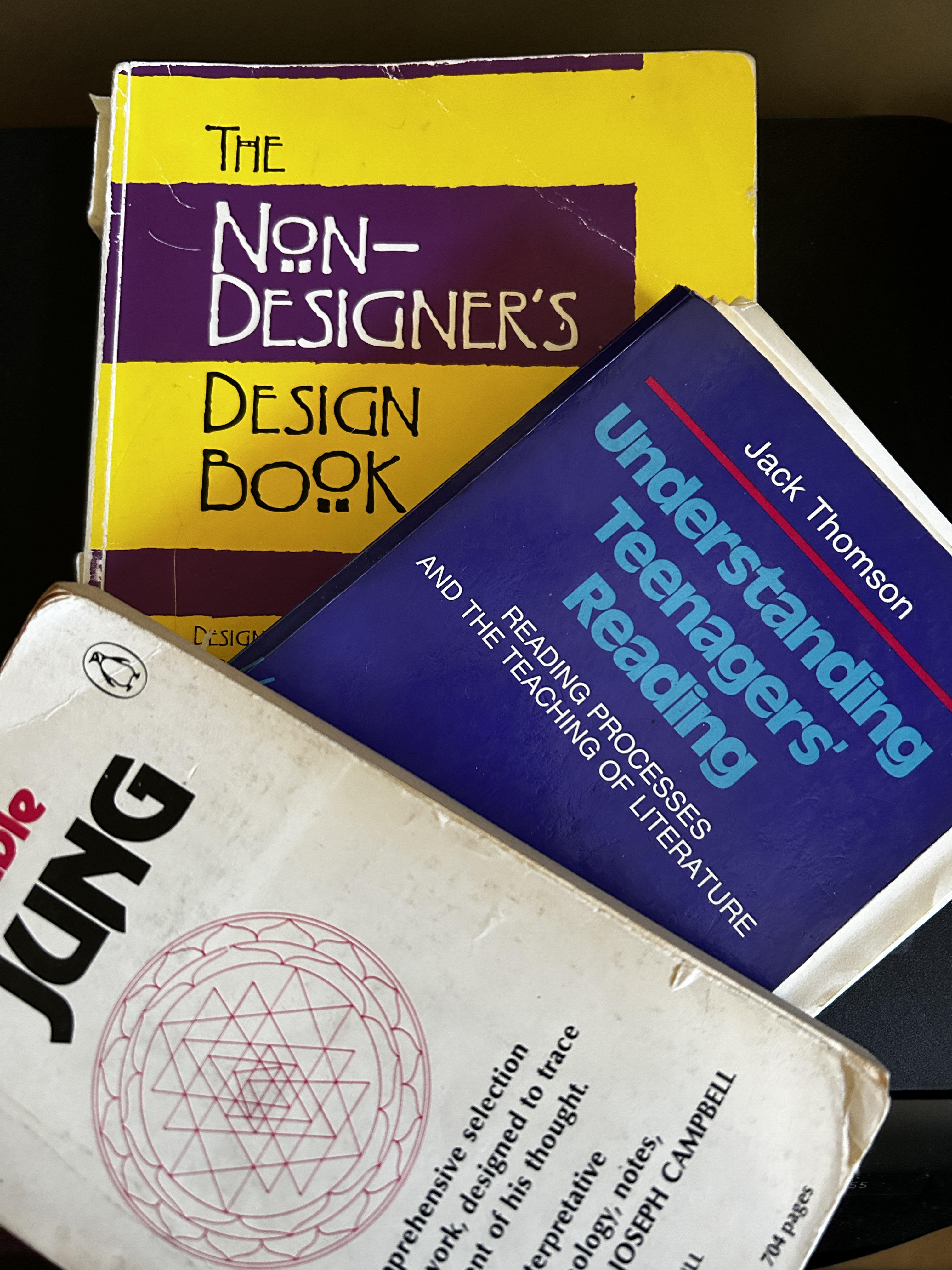
I’m shedding my thesis library quite deliberately. I won’t be reading any of them again. That part of my life is over. I sat and pulled off all the very many markers I’d added to these books, while reading almost nothing of what the makers had indicated was important to me, years ago. While doing so, it occurred to me that reading has been my life art. I read for solace. I read for information. I read for concepts and thought maps to help me understand my life. Why is reading not thought of as an art? Look what I did to one of the many, many books that fed me!

I dove into books and swam through the ideas and language, then rewove my mind experience with memories of my experiences and into future understandings and behaviour. I created, not just a Ph.D. Thesis, but experiences in the classroom for me and for the students. I learned. I grew. My perceptions became more intricate and detailed. I read more, and grew more. This has been the great joy in my life.

Things Change

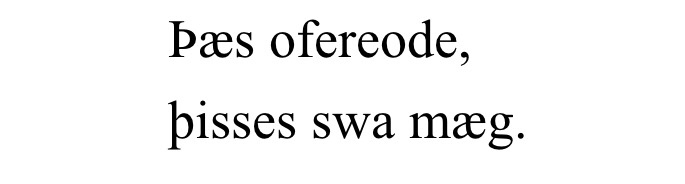
Many years ago, I had to take a course in Anglo-Saxon literature. It was intense because I was one of only 3 students so I couldn’t even skip occasionally – and I would have liked to. The only thing I remember from that course was this chorus from a long poem. As I remember it, (not according to the modern translation,) the poem was about feasting at the high table, followed by the chorus – 

“That passed away, so shall this.”

Later, another verse about being in the middle of a storm on the North Sea, followed, of course, by the chorus –

“That passed away, so shall this.”

When I think of the Biblical quote about there being a time for everything, or the Buddhist concept of impermanence, I remember the message of this Anglo-Saxon poem – everything changes; nothing stays the same.

40 Years Teaching College Composition


a teacher
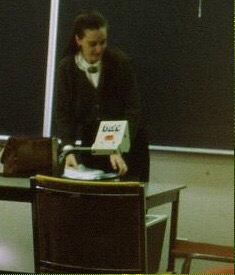
As a young teacher

I’ve been fully retired for a year and a half now, and I deleted all my teaching files a couple of months ago, so I can’t pass along any specific course materials. For Labour day, though, I’m going to share the distillation of my 40 years of teaching college composition and other language skills to college and university students, and my studies on how people learn to write from two advanced degrees in mid and late career.
1. Many community college students come in already resistant to taking English, and convinced they can’t write. It was my experience that many students were dyslexic and/or discouraged. Many believe that if they can’t write grammatically perfect, with no spelling errors, first drafts, that means they can’t write. They’re wrong, of course, but it takes a while to convince them. And sadly many college English courses insist on using the same decontextualized drill and kill exercises that had no benefit for them in their high school English courses.
Here’s what works in my experience.
  • Whenever possible, get students writing about something they know about and care about. Many of my students were visual, so I’d get them describing what they could see. Sometimes it helps to get them to describe how to do something they are good at, and encourage their use of detail.
  • Remind them over and over, directly and indirectly, that their first efforts will be messy and encourage them to NOT WORRY about messy-looking, roughly planed first drafts.
  • I learned how to make it a ritual to start classes with what I called a “free write” – students had to turn off their screens or reduce the page to an unreadable size, and then I’d set a timer for five minutes. The rule was that they had to write about whatever they wanted to and they couldn’t stop and think, they couldn’t stop moving their fingers; they had to constantly be writing. If they had nothing to say, they had to write something like, “I have nothing to say” over and over till they had something to say. After the 5 minutes were up, I never looked at what they written, but they could use any ideas or stuff they’d written for class assignments, or not. Some thought it was a waste of time but if you have them do it, and model for them by doing it yourself too, with them, at the very least their keyboarding facility increases, and often their ability to string words together gets stronger too.
  • Sometimes I’d have students work in pairs or small groups and read their drafts aloud to each other. This helps them feel the flow of what they’ve written and gives them ideas from hearing each other’s work.
  • I had 3 rules for feedback –
    1. Everybody has to give solid feedback to everybody. No “correcting” or suggesting allowed.
    2. Ask questions where you the reader / listener need more information to understand or are just curious and want to know more. (This helps students learn more about audience reactions.)
    3. Tell writers SPECIFICALLY what you like. Never, never. Never just say “That’s nice.” And let it go at that.
  • Put them to work. There are a lot of sites that give writing and grammar advice, like, for example, Grammar Girl – http://www.quickanddirtytips.com/grammar-girl – get students to find as many as they can and maybe have them compare them in small groups, or do brief presentations on why they think they’re helpful, or not. This sets them up, possibly, to know how to support their writing when they’re working independently in other courses or on the job.
Some technical suggestions:
  • If you’re in a computer lab, I’d suggest you get them on Google Docs – they can access their Google Account on their own or other computers or tablets and work outside of class. Google Docs is similar enough to Word that it’s no trouble to learn and it’s free.
  • If you create a PowerPoint and you want them to have a copy, move it to, or create it in, Google Slides because you can then give them a link and they can access it themselves.

Much respect and gratitude to those teaching as this new school year starts!

Good luck and happy teaching,

Learned or Learner: Do you learn more than your students do? — Douchy’s Blog

A big part of the teacher’s role has always been to serve as an example to their students, of what it looks like to be educated. When knowledge was the key to future success, a teacher was the living, breathing example of a learned person. Students could look up to their teachers and aspire to […]

via Learned or Learner: Do you learn more than your students do? — Douchy’s Blog

Questions

Carl-Schoonover-Portraits-of-the-Mind-300x241
http://blogs.plos.org/neuroanthropology/2010/12/02/wednesday-round-up-131/

Questions

What does it mean
to love yourself –
other than the herky-jerky
I’m okay; I am okay; I am okay?

What does it mean
to be compassionate with yourself
other than accepting the lust for
more chocolate, more wine, and even the occasional secret
cigarette?

What does it mean; what does it mean?

Who am I
and why do I want
to know this?

What does it mean?

Dyscalculia

I’ve just read a very interesting post on a version of dyslexia that deals with numbers –  http://www.bdadyslexia.org.uk/about-dyslexia/schools-colleges-and-universities/dyscalculia.html and now I understand a lot more about how my mind works, and doesn’t work.

I have trouble with left and right, and trying to read maps is painful and embarrassing. I also switch numbers (1,2,4,3,5 etc.) if I try to read them quickly. I have to be VERY careful with large numbers as I can confuse 1000 with 10,000, etc. Plus it’s very hard for me to remember telephone and other numbers, even dates in history. So I think I have dyscalculia. I am also mildly dyslexic, and have some trouble with spelling, but I love words and writing. Despite those limitations, or maybe because of them, I’ve been told repeatedly that I’m a good teacher, good at helping people learn.

I am deeply grateful that I was able to learn and develop tactics that allowed me to survive and thrive as a student and as a teacher. Both as a teacher and as a learner I have observed that people often don’t remember how they learned something; we just own and use what we’ve learned and move on. So I can’t remember how and from whom I learned my tactics for surviving my weaknesses by adapting my strengths to cover for them. The only way I can express my gratitude is to show others alternate learning and performing routes that might work for them. And share with everybody what I learn about how our human minds work, and how differences in how they work can be dealt with compassionately.

Giving people the space and opportunity to learn how they learn, and how they can deal with their weakness as well as their strengths is not only wise and kind, it creates a better world for all of us.

If you are reading this and think you might be dyscalculic, check out your sense of self-worth and see if you have learned to focus on adaptations to help you survive, or if you dwell too much on what you struggle with. Perhaps you need to acknowledge how hard you work, as much as what you can’t do easily. To boast and inspire, I eventually got my Ph.D. and posted my thesis on line –  http://www.scribd.com/mobile/doc/2063617 and here’s my not quite up-to-date e-portfolio – https://joanvinallcox.wordpress.com/my-e-portfolio/