Credo in Youth and Age

Written in my mid-twenties
A poem written in my exuberant youth
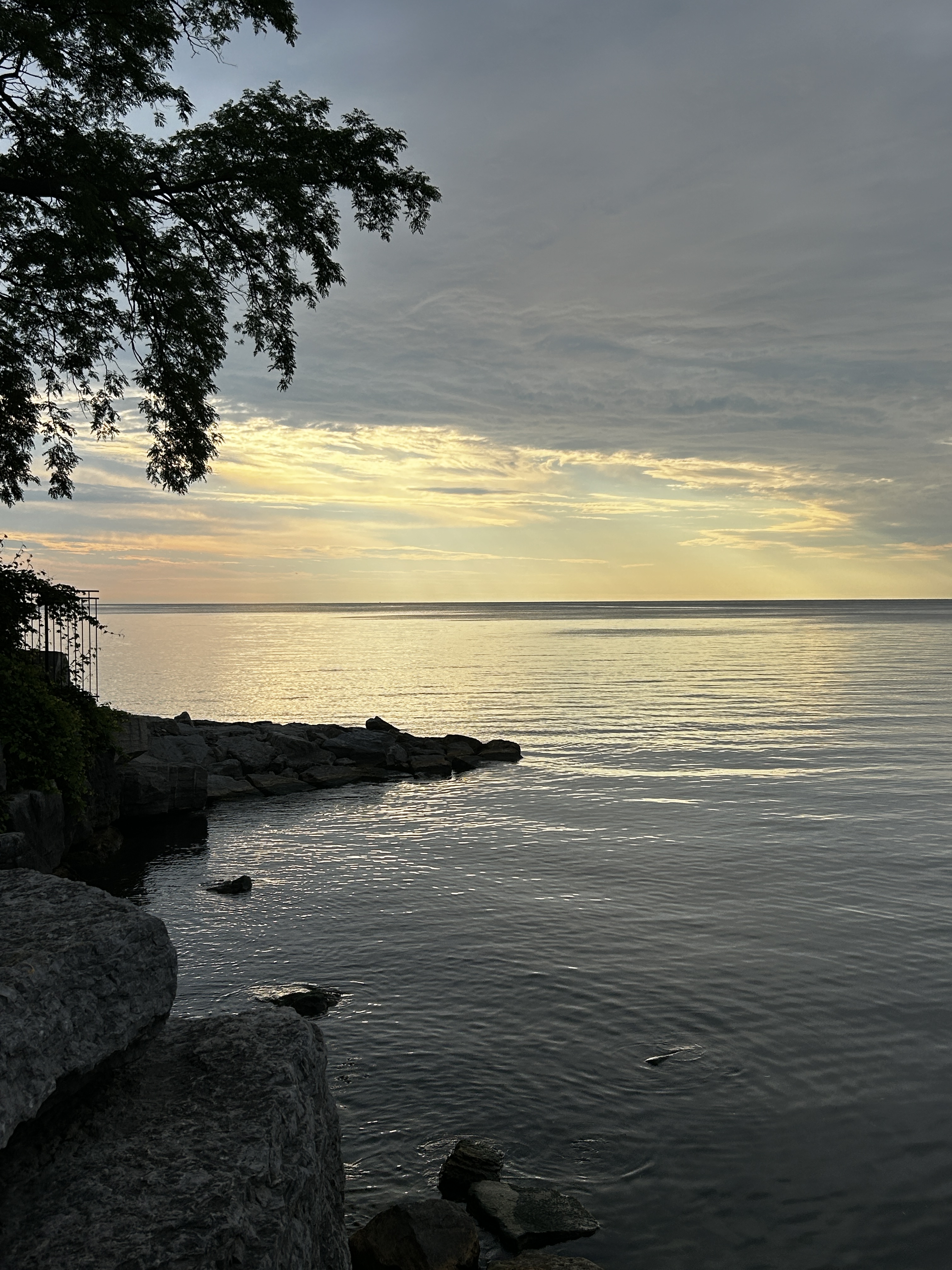
Early morning, looking east over the lake
Written in my late seventies
Credo 2
I have lived long enough
to understand
I will die;
I choose
to delight
in moments
of bright joy.

In the early morning light
I surrender
to the glory of June.

In the morning breeze
branches move and sway
while their shadows
dance
in the sunlight.

In the quiet of solitude
I am
alive.

Thomas, the So-Called Doubter

Inspired many years ago by a sermon by Rev. Amy Persons Parkes

It doesn’t make sense.
It never made sense but,
I liked him, and more -
I felt complete, listening
to him, being
with him.

I didn’t like the other followers so much,
Maybe Mary and a couple of the quieter ones,
but Peter’s constant blustering and posturing,
his wild swordplay and then, after the arrest,
his noisy denials, distancing himself from the teacher,
even as he died.

He was dead. I saw that. With the women.
He bled.
The women followed his broken body;
I left.

I wandered, lost.
I walked
and walked.
My thoughts, thick and chaotic,
roiled and battered me,
but I couldn’t forget
him.

It never made ‘sense’;
there was no logic or plan but
when I was travelling with him
it felt right.
Sometimes, I even liked Peter.

After I found myself walking
toward Jerusalem again,
I remembered
I’d left my bag in the upper room.
I needed my stuff. I needed to leave.

They were still there.
I could hear them before I got up the stairs;
they sounded excited, even happy.
I could hear Peter’s voice rising about the rest,
and I was furious.

I opened the door.
They turned and all laughing and yelling:
“He’s alive! We’ve seen him.”

What idiots! I saw him die while they were hiding.
I saw the nail-marks,
the wound in his side,
his body’s release
and collapse.
I saw his blood stop.
I told them that and rushed away,
choking on their words, their joy.

I remembered his stories of being in the desert,
And went there to pray.
I remembered him, and his stories,
his tolerance of Peter and the other jostling ones.
And I still needed my bag.

On the Sabbath, I went back.
They were there again, quieter
but joyful. They
welcomed me.
My heart opened.

Then, beyond sense,

He is here.
Time

2016

An old back of the hand showing veins
In youth we come through our bodies as explorers
seeking and measuring,
astounded and disappointed
as we grow into ourselves.

In our long midlife, we travel our path,
forgetting and wandering,
sometimes grateful, mostly blindly seeking
the more we yearn for.

Now, our bodies re-astound us:
aching and refusing,
complaining and attacking,
reminding us of time.

The Teal Curtain

Threadbare, faded, ragged from its many unpackings,
each time, deposited in a different storage -
a teal woven curtain, worn meaningless,
hiding
nothing.

The building that contained it - gone.
the people who lived there - far away, most dead.

A memory of a memory of a memory luminous
once,
flaring again, as it crumbles.

Too Much

2015 & still today!


I have a horror
hangover:
a surfeit of tv news dribbles
repeating
the images and words -
addictive
and numbing.

To look away, to change the channel,
I switch to a story of plotted
murder, where the killer
is named and blamed
and hunted and destroyed -
and it’s over!

When I can’t resist tv news glancing again,
the crowds are still
raging in the streets.

My Father’s Other Daughter

A poem from the 1980s when I was interested in Jung and mythology. (I have no sister.)

skin and veins
1
My father's other daughter
has joined me.
 
I'd flown at the sun and been blinded:
I saw dark ringed with glory.
 
2
My skin was a sandpaper burn;
I wanted to sleep.      I'd flown
through to the dark
but I knew I must see to remember.
 
She came to me then
and offered balm.
 
I felt blessed.
 
3
This happened:
she nursed me and I loved her.
 
When I awoke, she stood before me,
watching.
My skin was grayish and loose.  I felt wonderful
and frightened.  The balm didn't
always work:
(death had to be faced.)

4 - A New Voice
"My mother's other daughter has moved back in.
I hadn't seen her much since her teats grew and she
followed our father into adventuring. I'd made her
nervous, so she stayed away.
 
She was dying when she got here; she'd known it was 
time to seek me and the wine-like milk of death,
or baptism.
 
She said she was grateful, repeatedly. Three times she
started to cry when she felt my hands, but I
remembered how to tease her into laughter.
 
She only complained when she was afraid.
I only left her alone when she couldn't see me.
 
We were waiting for the moon and the knife.

5 - The Other Voice
Time now.          She draws a scalpel
delicately down
the back of my head,
down my spine,
     between my legs,
up my belly, between my breasts,
 
across my lips,
between my eyes, and up
to where she began.
 
My right and left are separate,
  joined by a thin bloody line.
 
She tugs gently at my hair; it falls
away from my scalp.
The cool moonlight
illuminates my new skin.
 
She pulls again, and my arms
 are uncovered
as the glove of my old skin
drops off.
 
I am new and naked,
and step
into her shadow.

The Jester

I wrote this in university, after realizing that I could write something and call it a poem, that I had a poetic voice.

The Jester

smiles and grimaces - 

juggling
balls,
words. 
emotions.

People applaud
the gesture.