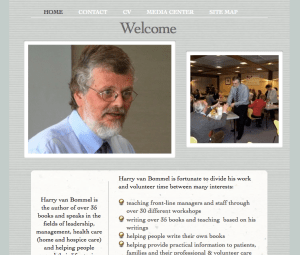
I GO-trained into Toronto today to attend some sessions at the MagNet ’09 Conference. I was really impressed with the excellent level of organization and with the high quality of the two sessions I attended, a session with a panel of literary agents answering questions and a session with Harry van Bommel on self-publishing. Both were excellent. Harry van Bommel speaks frequently and if you ever get a chance to hear him, do it! I learned a lot from him. http://www.harryvanbommel.com/Harry_van_Bommel/HOME.html
Harry van Bommel's Home Page
It was a lovely day to be in downtown Toronto:
Toronto's Old City HallToronto's current City Hall
Tomorrow I give my presentation on researching using the web.
iQ mobile Search - an iPhone Screenshot
I worry a little because the audience will be doubly diverse. They will have many different angles on what they want to research and what for. Plus, today I noticed a wide range in web awareness and know-how in those attending the sessions I was in. As well, I’ve been tweeting using the hashtag #MagNet09, and when I’ve searched, very few seem to be using it. I’m hoping I’ve got something for everyone but tomorrow will tell.
I’m using a PowerPoint, for three reasons.
I like KeyNote better, but if anything went wrong with my laptop, there might not be another Mac handy and a PowerPoint file will play on a Mac or a Windows platform. (Not that I’m paranoid ;-> but I’ve emailed a copy to my Google mail, and I have a memory stick with my presentation on it which I carry separately from my laptop,)
I’ve just found PowerPoint’s Presenter Tool – something I thought only Keynote had – and that will make my presentation easier to run.
I don’t trust hotel wi-fi having had previous bad experiences with giving web-based presentations where the promised wi-fi was down more than up.
At WordCamp Toronto, 2009, I Tweeted using the hashtag #wct09, and that was fun, and more social for a couple of reasons.
I was less focussed on getting every piece of wisdom and could relate more f2f with the people around me; and
I could have conversations via Twitter with others at wct09 (if they were using the hashtag) pick up pieces of wisdom from their tweets, and talk f2f with them after meeting on Twitter.
So, for me, with the current social applications, Live Tweeting was a richer experience than Live Blogging, but both were fun.
Learning
I learned from the mix of new information in presentations and conversations around and between the sessions, and my most frequest conversationalists were –
Dealing with copyright can be confusing. In case you don’t know about CreativeCommons, or want a quick visual review, I found this through Dave’s Whiteboard
The most fascinating thing about the web is that there is no end; there is always more and new.
The most frustrating thing about the web is that there is no end; there is always more and new.
Everything is always changeable. My website – jnthweb.ca – is not the same now as it was a half-hour ago. I just added my most recent brilliant idea,
Currently, I look at Twitter using the third or fourth application I’ve tried. It’s Nambu now; it was TweetDeck, and who knows what I’ll try next. And Twitter is the poster child for constant change, as Tweet after Tweet flips by.
My friend showed me her new laptop today, and I drooled enviously, although mine does everything I want and need and is only a little more than a year old.
I’m behind in my Bloglines again, no, make that still. I never did fully catch up.
Trying to catch up! - via Creative Commons/Flickr
So I love the web, and I learn so much from what often feels like frittering my time away, but there is no end to what you can learn to do and learn and do on it. Clay Shirky, in Here Comes Everybody, says in the first 100 years after the invention of the printing press, it broke more than it fixed. I know that the printing press brought endless developments with it from dictionaries to science, from the Enlightenment to romance novels, and more. And here we are in the same early stage with the web, where everything is alway beta, never done!
Seems like a contradiction in terms, but autodidacts are social; we have to be. When I learn from the web, I access websites, support people, books, friends, and the wonderfully generous denizens of the web. I’ve spent much time over the last couple of weeks trying to get on top of creating the website I want, one that looks competent and meaningful. (I believe, as I repeatedly say, that we start reading before we decode a single word. We get an impression of the page or screen and our attitude hinders or helps us understand what is in front of us. So I want a site that appears knowledgeable.) To create the site I want I have,
searched for information on Google, using different queries;
complained on Twitter (and elicited help);
phoned a generous web-friend and accepted his help;
bought and read parts of books;
downloaded and read parts of pdfs;
talked to knowledgeable friends;
tried out all kinds of WSIWYG solutions, both offered by friends and found through Google;
finally circled around to deciding on either (decisions are hard for me ;-> ) KompoZer or WordPress.org both of which I’ve been learning piecemeal over a number of years;
settled in to create the site I want on my domain;
read up on FTP through Google and on my domain host’s Support pages;
sorted out, with phone help from my domain host’s Support, NetFirms, how to use FileZilla;
re-installed the use of WordPress, which I had deleted in a fit of frustration and pique, with the help of NetFirm’s phone Support;
choose a free wp template, Titan, (brother of the theme I’m using in this, my wp.com blog) and decided I would need their Support, and to pay for it because they have to make a living;
decided to follow Jestro on Twitter for information and quick requests for support;
Spent all day trying to follow a tutorial on how to access Titan’s CSS, gave up and added my problem to the Jestro Pro forum and went to supper. (I had done similar CSS work with help from Dave Ferguson on my wp.com blog so I knew it was possible.);
Got back from supper to find the answer already on the Jestro Support Forum (and an explanation that the tutorial could have been clearer);
made some changes I feel good about, but also discovered that my learning will be continuing! ;->
All of those were interactions with people or the communications created and left by people. Even autodidacts are, by necessity, social learners.
I will be accepting the help of other generous people, directly and indirectly, but there are two more important observations I want to make:
As a teacher, I understand why students get cranky and worse when they are frustrated because they are just not “getting” something they want to learn. It makes me (and I suspect them) feel unintelligent and inadequate, and I, (and I’m sure them) get upset with myself and anyone else I can blame. It must be even more so for those who learn differently than our schools teach. That is why I am revealing my own struggles; learning is only easy when you are, by your own nature, good at learning in certain areas. We ought to be compassionate for our own and others’ struggles to learn in the areas where we don’t have the natural velcro for.
It is hard to ask for help, even help you have paid for, but you must in order to keep on keeping on (as Gladys Knight advised)! I don’t know if it’s a societally developed fear of loss of face or an inherent fear of showing weakness, but I find it difficult to ask for help. I think others do too.
So that’s my current learning struggle, which I will continue on with, after I get some work that I’m good at 🙂 done.
An autodidact is someone who learns outside of regular school settings, someone who teaches herself (or himself). It used to be a kind of demeaning label, meaning someone who had spotty and uncertified knowledge. I claim the label “autodidact” as a badge of honour! I used to learn from books, even sometimes from tv, but now we have the web. I love the web. I learn so much from what I find on it.
Recently I gave myself a task that requires me to learn more about how to create web pages. I’d heard about CSS and knew, theoretically, what it could do. But every time I tried to do anything using it I hit THE GAP. THE GAP is the point where I get stuck and can’t go any further, even though I can see what I could do two steps along the learning path I’m on. When I hit THE GAP, I’m stuck. What I do then, is ask a knowledgable friend, if I can find one, or, more often, find a workaround. For a while, my workaround was wikis. I love wikis but they’re meant for sharing, not for using as your personal website, although they can work, sort of, as one.
One of My Wikis
Sometimes I find something a lot of the design work has been done for me, and I use that. Blogger had templates, and so does WordPress, which I graduated to.
My Blog
But my design vision just isn’t satisfied.
I used tools like the old Netscape Composer and currently its grandchild, Nvu, both of which are WYSIWYG web page creators.
My Domain
But my reach exceeds my grasp because I want something I have more control over. I want to produce the kind of website that says to readers “this person has powerful content: you can tell by the appearance!” (I’ve read the research on how people are reading before they decode a single word. The appearance of the text and page gives information that signals information to readers which profoundly affects how they take in the content.)
I’ve learned a little HTML code, and I’ve bookmarked sites where I can find more. But I’ve never taken a course in it, and a lot of it just looked bizarre and unreadable to me. (I was a text person initially, and not technically inclined, but I want to communicate on the web so I have to learn how to do so wholistically.) And using “View Source” and copy/paste seemed to me like a kind of plaigarism and theft. (What can I say? I’m old-school.)
Sometimes I think I learn backwards. I know my desired destination but I keep getting blocked at THE GAP. But I continue to struggle to build a little further out into the unknown territory, and I learn something from each struggle. Each struggle closes THE GAP a little more. I read manuals and follow instructions but I think most people who are inside the knowledge bubble have trouble being aware of what those outside the bubble might not know. The instructions are crisp and clear until they mention going to the “terminal shell” or some other ‘obvious’ term. Huh? Wikipedia tells me what it is, but I don’t get how to use it in this set of instructions. (I’m not the knowledgable audience they were writing for.) So I stop and try some other path. Till I get frustrated with it, because I’ve foundTHE GAP in it. I’m really good at findingTHE GAP. So when I find someone, often on the web, who explains things in a way I can understand, someone who gives me the practical aspects of the concept, I am delighted, excited and grateful.
That happened to me today. I found Chris Coyier’s video on HTML & CSS – The VERY Basics. 32 minutes of pure pleasure. He shrank –the gap – till it virtually (no pun etc.) disappeared for me.
He has a gift for teaching and I’m a grateful student.


 So, for me, with the current social applications, Live Tweeting was a richer experience than Live Blogging, but both were fun.


 Learning Living