Romances & Mysteries

When feeling is perilous
I retreat into the safety
of eyeing words that dance
me into a happy ending.

When the numbness
is in danger of cracking
I turn to other worlds
where anxiety is guaranteed an ending.

When confusion and fear
overwhelm my closed eyes
and I’m enveloped in my own uncertain story,
I reach into hope and try to open my heart.
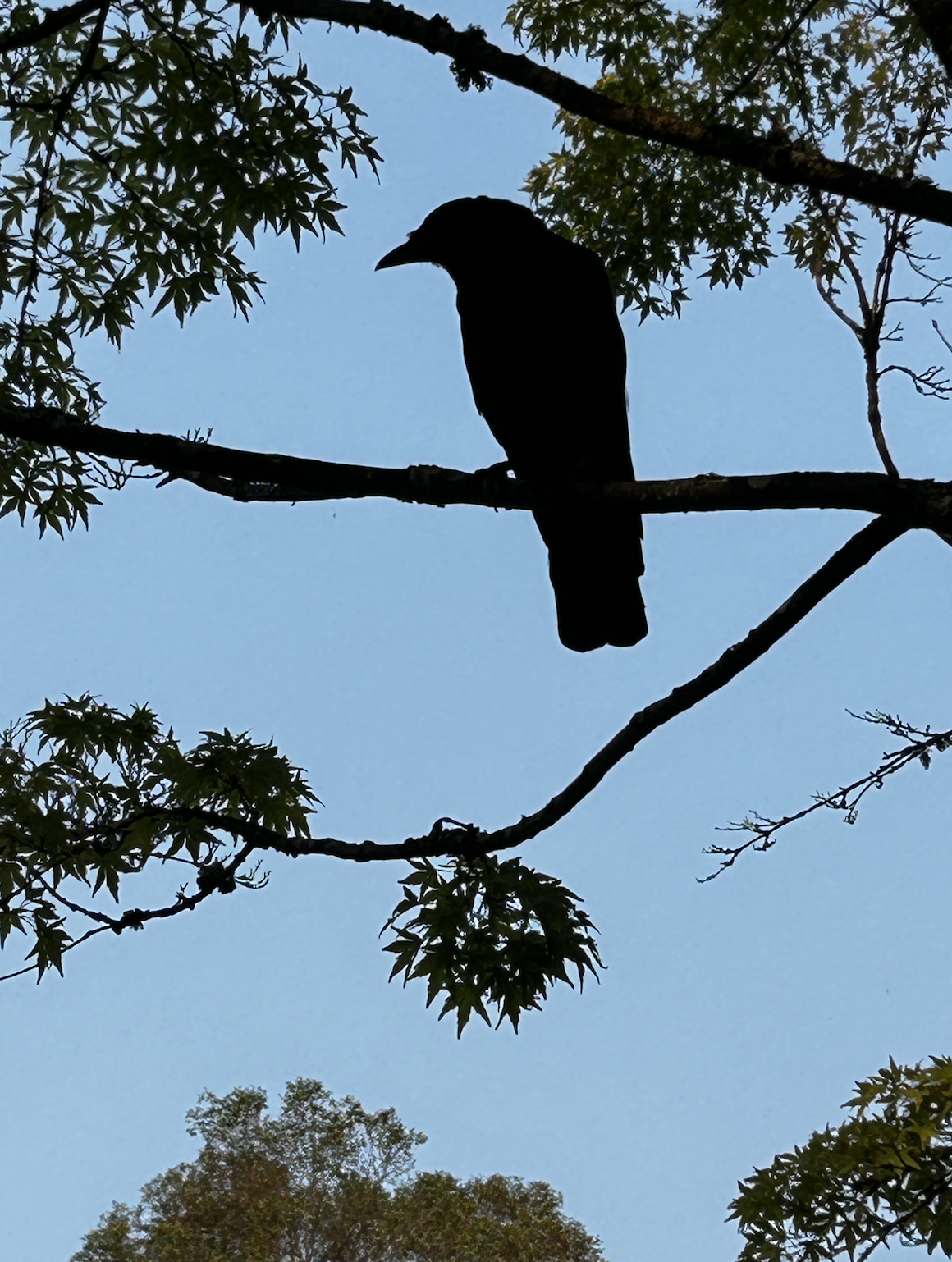
Crow on a branch

Childhood

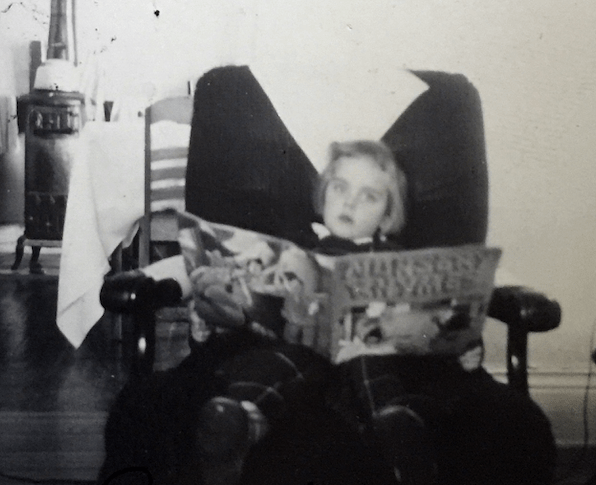
child reading a large book

I lived in libraries and classrooms,
More solitary among the living,
More alive in pages turning,
Building my armour and bridges.

The silence at home covered
Flattened noise; obscured dreams and 
muffled resentments, darkened mirrors 
Seeking to display projected images.

An Ode to the Authors I Appreciate

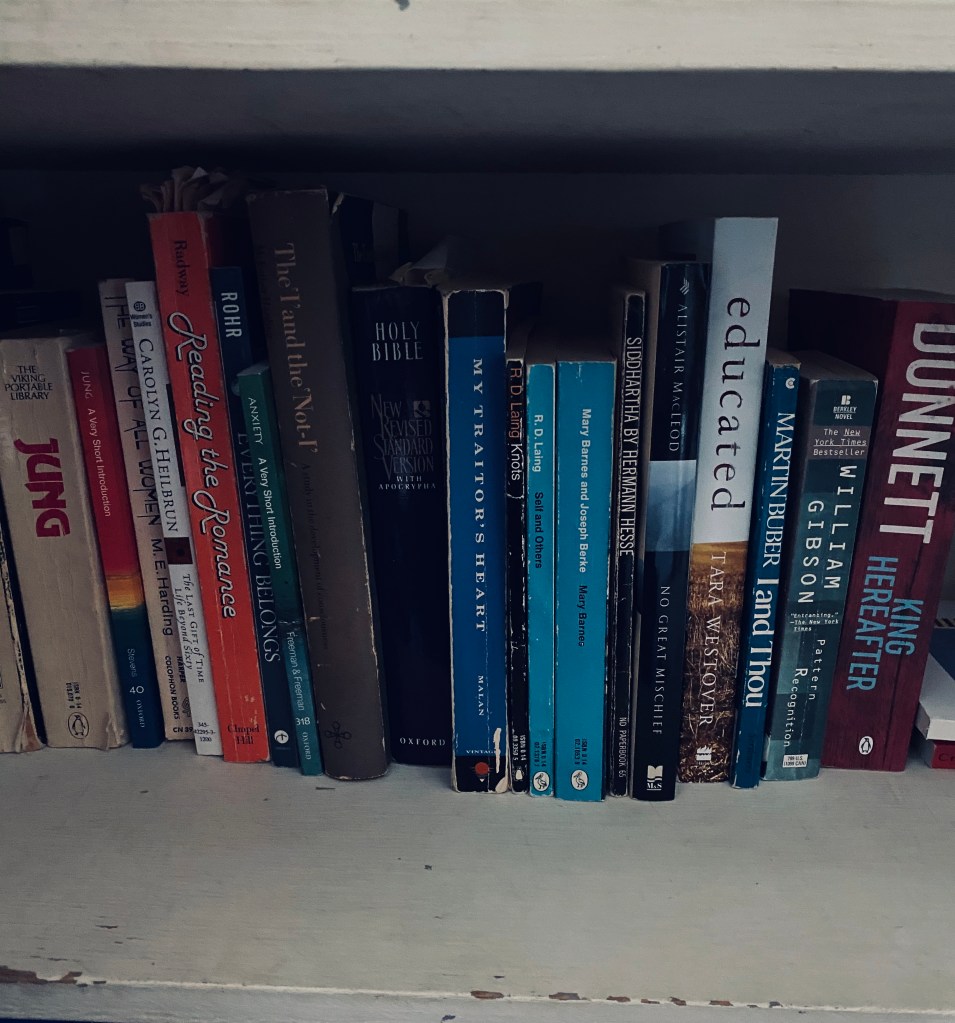
I see the world
through a scrim of 
books.

I ride on words woven together,
carrying more freight than
just solitary singles, side by side.

Sentences and paragraphs,
pages and chapters.
books – tap feelings and understandings,
echoing the fingers that tapped letters, words, pages – 
and built, shaped my mind.

You, with warp and weft of words, created
this floating, flowing, close-woven
jewelled net-lace I ride on and pull 
through the ring of my mind,
accepting joyfully your gifts.

Mapping the Wilderness

To sample a poem from my recently published collection – available from http://www.blurb.com/b/4591664-mapping-the-wilderness – listen to me reading –

Approaching Sixty, I See That … https://soundcloud.com/joanvinallcox/at-midlife-i-see-that  – Hope you find it meaningful, and perhaps buy a copy of my collection.

Courage at eighty is different from at twenty
But both ages carry their future constantly –
A fearsome thrust into an unmapped wilderness.
To carry your future at twenty is to seek
The wilderness because it must be mapped
And shaped. There are roads to clear and homes
To build, and no one has given you a plan
For your wilderness, (just the one they didn’t use in theirs).
So you thrust forward, knowing too little and enough,
Building blindly wherever you find a clearing, lifting
The log of your childhood so it bridges your fears,
Confident that it might not collapse on you.

A fearsome thrust carrying life forward blindly
At eighty requires enough love to endure
Despite loss, and endure because of loss to come,
And endure because of the sweetness still here, if
Courage persists. And, despite (because?) the compass pointing
Through the wilderness to the edge of the map,
Tells a tale seen over and over about endings, despite this,
To work through today knowing
too much, and not enough, about tomorrow.

Courage at eighty is different from at twenty
But both ages carry their future constantly –
A fearsome thrust into an unmapped wilderness.
A Movable Text: faux reading, reading foe or the integration of text and image!

In early 2008 I decided to reexamine what I know of reading by writing in my Eduspaces blog. Eduspaces was the first social community I was a part of, and its influence continues with me today as many of the people I encountered there, I still follow and/or friend.

I had been noticing the use of text in tv commercials and I included that new use when I set out my three categories of how we read text:

Lyric reading, like singing, entangles the whole person in its meaning. Useful reading is informational  and a requirement for specific tasks and accomplishments. Faux reading is the recognition of words used in an isolated and semantically meaningless way as indicators or symbols, seen in ads, commercials, some art, and traffic signs. All require word-recognition, useful and lyric reading require knowing how to decode the text,

I wouldn’t call it “faux reading” currently, nor would I see it as an enemy of other kinds of reading. Now I see it as the “integration of rhetoric, image and vision” (Fleckenstein, p. 7) and I see it frequently on tv. Here’s an example from last fall’s American election:

It’s a powerful use of text as image, where you have to be able to recognize the words, but the meaning comes only partially from the text and is highly augmented by the movement and size of the words and numbers. I think of it as text/image.

I think it’s being used increasingly; do you? And what effect do you think it has on the readers/watchers?

Citations

Fleckenstein, Kristie S., Sue Hum, and Linda T. Calendrillo, eds. Ways of Seeing, Ways of Speaking. West Lafayette, Indiana: Parlor, 2007. Print. Visual Rhetoric.
Vinall-Cox, Joan. Weblog post. EduSpaces: Joan Vinall-Cox. EduSpaces.net, 10 Jan. 2008. Web. 13 Aug. 2009. <http://eduspaces.net/vinall/weblog/245431.html>.

——-

http://jnthweb.ca/
https://joanvinallcox.wordpress.com/

Posted via email from joanvinallcox’s posterous

Reading Content; Content Reading

All learning is contextual, in my opinion. You have to already know some aspect in order to learn more. I remember my Psych 101 prof, many, many years ago, saying that any book with more than 10% new content would be unreadable. So this video, found through krea_frobro747 on Twitter, appeals to me because it makes sense of my experience both as a reader and as a teacher of reading. Anyone concerned children learning to read, here’s foundational knowledge. (Might help mild dyslexics, too.)

In fact, when I roam the web trying to learn, I have problem trying to understand posts where I can’t bridge the gaps because I’m missing crucial knowledge. I guess the real take-away from this video is the more content you know, the more texts that are accessible to you, and the more you can teach yourself.

It’s like watching (or reading) the news. Initially it’s all disjointed and confusing. But watch and read long enough, and you pick up what you need to know to understand it. You see the patterns; you learn more faster. That’s why experience is valuable; your knowledge net is large and finely detailed.