When my students make group presentations, I like to offer them a video of their performance to supplement and strengthen my feedback to them on what they did well and what they need to improve. Today, with the help of a student videographer and the iPad app Capture, I found an easier way to give them access to their video.
First, because their presentation was longer than 15 minutes, I had to prepare my YouTube account to accept that. On the advice of a student, I went to https://support.google.com/youtube/answer/71673?hl=en to find out how to do that. Once I had verified myself with my phone number, I was allowed to upload longer videos to YouTube. So then it was time to video their presentation. I handed my iPad with the Capture app to a student and she used it to video the presentation.
I have used videos before, but I always found porting the video to my computer and then uploading it to YouTube or Vimeo took many times longer than the video itself. I found it onerous. This time, I received my iPad back from my student videographer, and clicked “Upload”. This is the screen I saw:
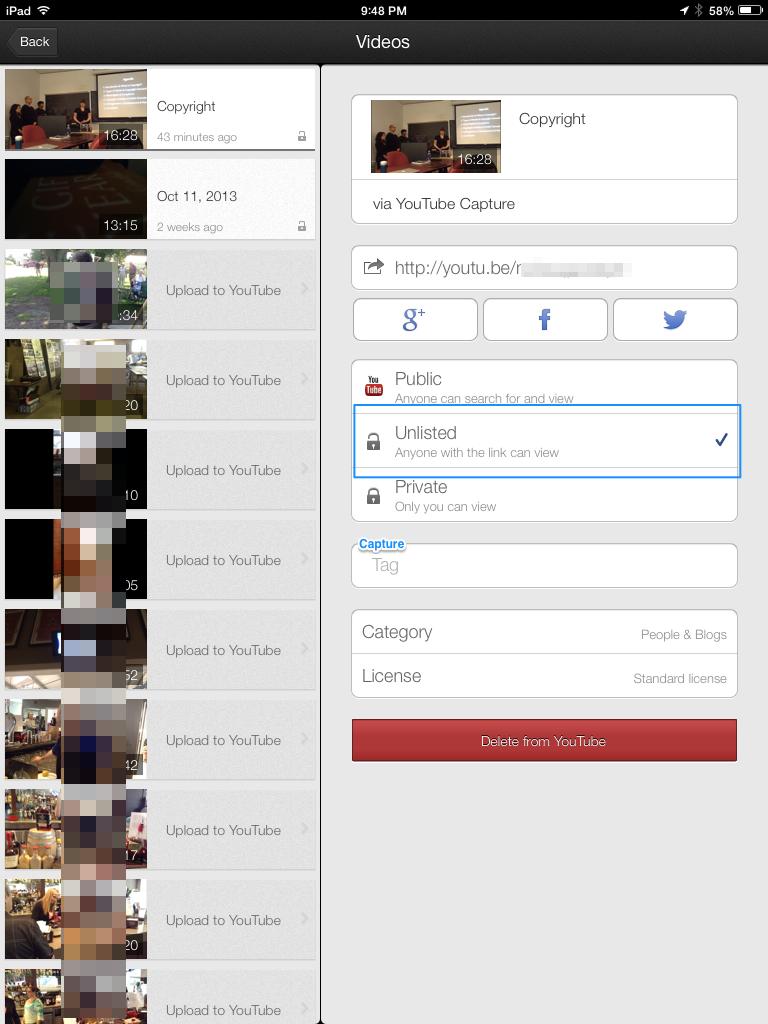
I chose the “Unlisted” posting, to give students their privacy. Only those with the link will be able to see the video. I use Wikispaces for my course container, and simply posted the link to the YouTube video of their presentation in their Project page, which only members of the group can access. I could have simply emailed the link out to them. Either way, they have control of the privacy level of their video. They can share the link, or not.
This process, using an iPad with the Capture app which is linked to YouTube, is so much easier than my previous process of uploading videos of student work, and I can give them privacy.
 Learning Living