
Trump Revealed

img_1948

A version of this was previously published on another of my blogs – http://joanvinallcox.ca/trump-mania/ 

I watched all the American election debates and coverage and I am nauseated. The 2nd debate, especially, sparked all kinds of reactions in me. Watching Trump make his (what I knew intellectually were baseless) accusations with his emotional tone so strong, I felt the sick fear that people would buy what he said, just because of the way he said it. I saw him pacing around and looming over Hillary when she was speaking, and recognized two things:

The normality of this kind of male behaviour, and
Why I thought it was normal; I’d seen it and experienced in the workplace for most of my adult life.

I felt sick with fear because I’d recognized Trump’s nastiness and misogyny from my first few media glimpses of him. I’d recognized his body language and the subtext in his words. I felt sick with fear as I watched apparently respectable people continue to support him, apparently blind to who he was. I felt sick with fear as I saw powerful men (and some women) support him. I felt sick with fear when I heard the bus tape because I’d known men with power who spoke about women in a similar way, and they weren’t penalized. I honestly couldn’t tell, during the debate, whether the man I’d despised, since even before the presidential race, was getting away with it, whether the earnest and smart, hard-working woman was going to continue being faulted because, they claimed, she was bad and her own party saw her as bland.

Perhaps it’s a good thing that the American presidential race lasts so long. Perhaps the length has given people the chance to look beyond the boasting and see the dark reality. I hope so. Goodness knows, lots of stories have surfaced about how Trump has stiffed contractors and even the caterer for his third marriage. The whole taxes thing that he’s now trying to spin into business acumen. The racial and religious baiting. The encouragement of violence – what did he mean when he said Hillary’s Secret Service guards should give up their guns?

Perhaps the long drawn out campaign has opened many eyes. I hope and pray! But I am astonished and fearful because so many are blindly supporting his appalling behaviour.
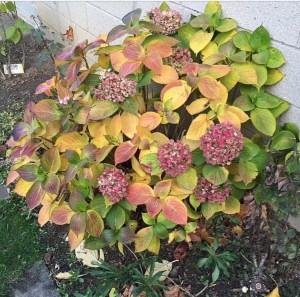
Autumn and Losses


img_0150

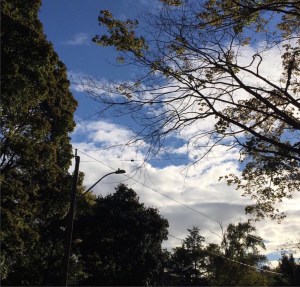
The autumnal riot of colours begins
to fade and thin, while losses blossom.
The ghosts of neighbours open the doors
of demolished houses.

I move into winter with opening eyes
watching the leaves reveal the tree
that will die and be born again –
forming and fading and forming again.

Bullies 

 Inspired, partially, by Trump

image

Bullies are blind to
differences;
they see the tenderhearted
as targets, used
to relieve their sense of angry fear,
to release their fearful anger –
used as their addictive catharsis.

Bullies are blind,
in their spewing of bile,
to the bruises they inflict,
constantly telling themselves stories
to create and increase excuses
for stoking their blind angers.

Bullies are blind to
how they are led;
they swallow concocted poisons
about others they fear would replace them,
about others they hope to destroy –
attacking these targeted others.

Bullies are blinded and fearful.

Hagland

image

The crone arrives like an undesired lover
leaving
the shape of your body
mutating.

Like an adolescent girl, you sense
changes
within:
unsought losses, unclear gifts.

You rage and sleep,
weep unwillingly,
demand more,
desire less.

There are no fairy tales here,
no promise of princes and beautiful gowns
only
the crone’s belly
and a different cloak of invisibility.

1997

Anxiety Poem

image

In The Midst

There’s been an accident
at the intersection
near my parents

and they are overdue.

Their neighbour answers
the phone – a confused stranger
after her stroke –

and speaks of flashing red lights.

Their friend with cancer is hysterical
on the phone
with no one in the house

and no answers.

As I pick up my car
keys to search,
the phone rings:

It is my child’s school; there’s been an accident.

40 Years Teaching College Composition


a teacher
As a young teacher
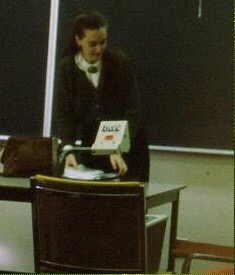
I’ve been fully retired for a year and a half now, and I deleted all my teaching files a couple of months ago, so I can’t pass along any specific course materials. For Labour day, though, I’m going to share the distillation of my 40 years of teaching college composition and other language skills to college and university students, and my studies on how people learn to write from two advanced degrees in mid and late career.
1. Many community college students come in already resistant to taking English, and convinced they can’t write. It was my experience that many students were dyslexic and/or discouraged. Many believe that if they can’t write grammatically perfect, with no spelling errors, first drafts, that means they can’t write. They’re wrong, of course, but it takes a while to convince them. And sadly many college English courses insist on using the same decontextualized drill and kill exercises that had no benefit for them in their high school English courses.
Here’s what works in my experience.
  • Whenever possible, get students writing about something they know about and care about. Many of my students were visual, so I’d get them describing what they could see. Sometimes it helps to get them to describe how to do something they are good at, and encourage their use of detail.
  • Remind them over and over, directly and indirectly, that their first efforts will be messy and encourage them to NOT WORRY about messy-looking, roughly planed first drafts.
  • I learned how to make it a ritual to start classes with what I called a “free write” – students had to turn off their screens or reduce the page to an unreadable size, and then I’d set a timer for five minutes. The rule was that they had to write about whatever they wanted to and they couldn’t stop and think, they couldn’t stop moving their fingers; they had to constantly be writing. If they had nothing to say, they had to write something like, “I have nothing to say” over and over till they had something to say. After the 5 minutes were up, I never looked at what they written, but they could use any ideas or stuff they’d written for class assignments, or not. Some thought it was a waste of time but if you have them do it, and model for them by doing it yourself too, with them, at the very least their keyboarding facility increases, and often their ability to string words together gets stronger too.
  • Sometimes I’d have students work in pairs or small groups and read their drafts aloud to each other. This helps them feel the flow of what they’ve written and gives them ideas from hearing each other’s work.
  • I had 3 rules for feedback –
    1. Everybody has to give solid feedback to everybody. No “correcting” or suggesting allowed.
    2. Ask questions where you the reader / listener need more information to understand or are just curious and want to know more. (This helps students learn more about audience reactions.)
    3. Tell writers SPECIFICALLY what you like. Never, never. Never just say “That’s nice.” And let it go at that.
  • Put them to work. There are a lot of sites that give writing and grammar advice, like, for example, Grammar Girl – http://www.quickanddirtytips.com/grammar-girl – get students to find as many as they can and maybe have them compare them in small groups, or do brief presentations on why they think they’re helpful, or not. This sets them up, possibly, to know how to support their writing when they’re working independently in other courses or on the job.
Some technical suggestions:
  • If you’re in a computer lab, I’d suggest you get them on Google Docs – they can access their Google Account on their own or other computers or tablets and work outside of class. Google Docs is similar enough to Word that it’s no trouble to learn and it’s free.
  • If you create a PowerPoint and you want them to have a copy, move it to, or create it in, Google Slides because you can then give them a link and they can access it themselves.

Much respect and gratitude to those teaching as this new school year starts!

Good luck and happy teaching,

Writing and Reading (Old Tech)

image

You are reading
this,
far away
from the time and place
where/when synapses
fired
their ballet
and I thought
a feeling
a rhythm
holding these words –
first sliding in black
ink
on a page,
waiting
for synapses
and time
and fingers
taping
green life
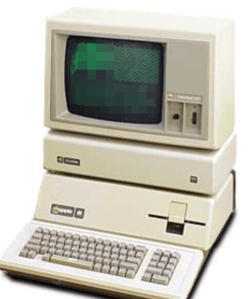
through electric connections to a screen
that holds
and releases
thoughts, words
reconstituted
regained
and printing up,
through black tape,
in a rhythm
of line and page
these words
which bend
and fold –

and, enveloped, travel
to be studied,
held,
approved.
A bored stranger submits
these words,
through the finger ballet, to the machine that prints
these words
for you
to read
now.